Quick answer: Gold-plated jewellery has a shiny, golden finish created by coating a base material with a thin gold layer, making it suited to festive and formal wear. Oxidised jewellery has a deliberately darkened, antique-style finish, making it popular for ethnic and everyday looks. The right choice depends on your outfit, occasion, and care preferences.
Gold-plated and oxidised jewellery are both popular with Indian shoppers looking for stylish pieces at accessible prices. But they look, feel, and age very differently.
The better pick often comes down to your outfit, the occasion, and how much upkeep you’re willing to do. Here’s a quick, practical breakdown.
What Is Gold-Plated Jewellery?
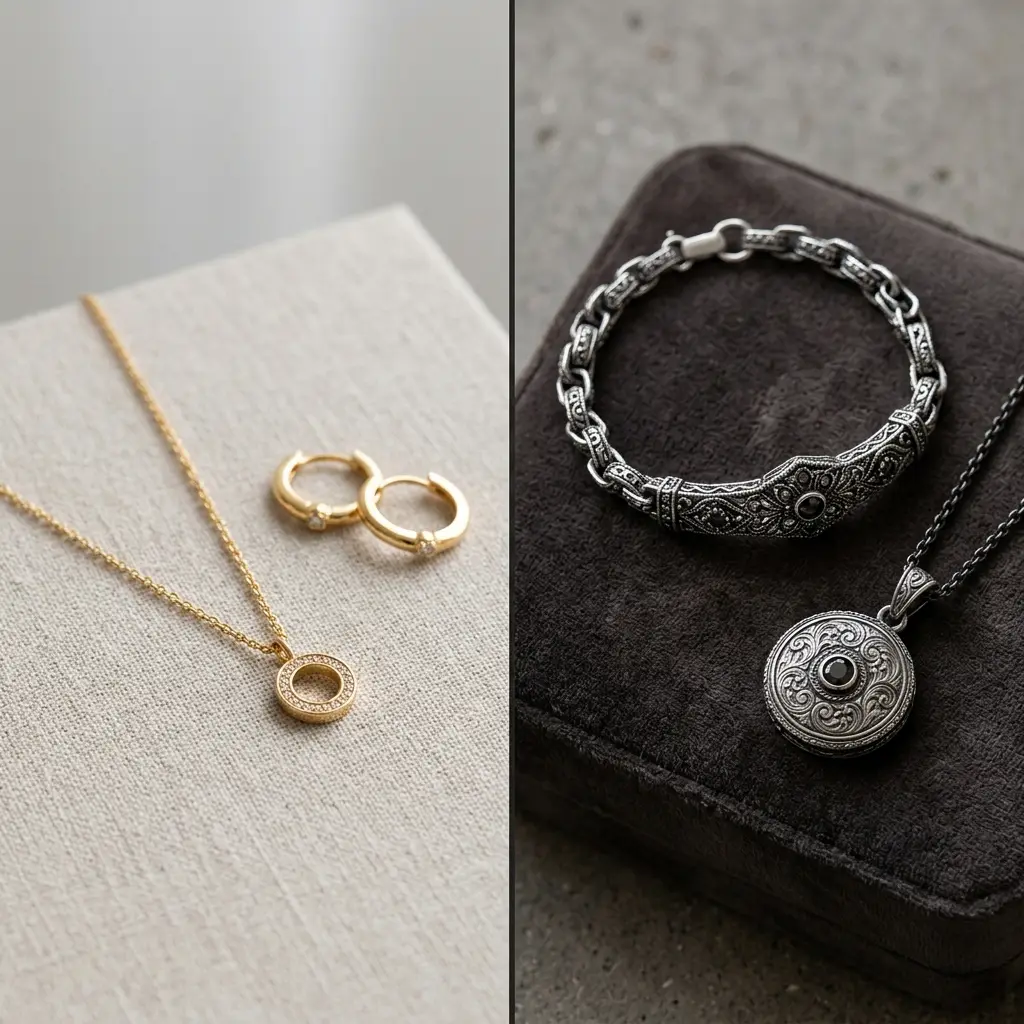
Gold-plated jewellery is made by coating a base material with a thin layer of gold or a gold-toned finish. This gives it a bright, polished look at a fraction of the cost of solid gold. Plating methods and base materials can vary between makers, so quality and finish may differ from piece to piece. Learn more about how this compares to other artificial styles in our guide on what is imitation jewellery.
What Is Oxidised Jewellery?
Oxidised jewellery gets its dark, antique-style finish through a controlled oxidation process, where a chemical agent reacts with the metal’s surface to create deeper grey or blackened tones. Oxidised jewellery isn’t automatically made of pure silver — the finish can be applied to various metal bases. Browse our oxidised jewellery collection to see the range of styles available.
Gold-Plated vs Oxidised Jewellery
| Gold-Plated | Oxidised | |
|---|---|---|
| Look | Shiny, polished, golden | Dark, matte, antique |
| Best for | Weddings, parties, festive wear | Ethnic wear, casual and everyday styling |
| Care | Keep away from water, sweat, perfume | Wipe with a dry cloth; avoid harsh chemicals |
Which One Should You Choose?
If you’re dressing for a wedding or festive occasion, gold-plated pieces tend to complement sarees, lehengas, and gowns well. For office wear, casual outings, or ethnic fusion looks, oxidised jewellery often feels more versatile. Many shoppers keep both on hand to match different moods and outfits.
Final Word
Neither style is objectively “better” — it comes down to how you want to look and how much care you’re willing to give your jewellery. Explore both collections to see which one fits your wardrobe.
Frequently Asked Questions
Is gold-plated jewellery real gold?
No. Gold-plated jewellery has a thin layer of gold (or gold-toned finish) applied over a base material. It is not solid gold, though it offers a similar look at a lower cost.
Does oxidised jewellery turn black?
Oxidised jewellery is intentionally darkened during manufacturing to create an antique-style finish. This darker tone can fade unevenly with wear over time, particularly on pieces like rings and bangles that see more friction.
Which is better for daily wear: gold-plated or oxidised jewellery?
It depends on the piece and how it’s cared for. Oxidised jewellery is often considered easier to maintain for regular use, while gold-plated pieces typically need more care to protect the gold layer from water and perfume.