
Quick answer: Oxidised jewellery gets its dark, antique-style finish from an intentional chemical treatment, often sulfur-based, applied to the metal’s surface. This finish can appear on sterling silver as well as other base metals, so oxidised jewellery isn’t automatically pure silver. It’s popular across India for its ethnic charm and easy pairing with both traditional and fusion outfits.
Oxidised jewellery has earned a permanent place in Indian wardrobes. Its dark, weathered look pairs beautifully with everything from a simple kurti to a heavily embroidered lehenga, and it’s become a go-to choice for anyone wanting a statement piece without the shine of gold.
What Is Oxidised Jewellery?
Oxidised jewellery gets its signature dark grey-to-black finish through a deliberate darkening process, not natural wear and tear (Angara, 2025). Jewellers apply oxidising agents to the metal’s surface to create this antique patina.
Here’s an important clarification: oxidised jewellery is not automatically sterling silver or pure silver. While sterling silver is commonly oxidised, the same dark finish can also be applied to other base metals and alloys. So, when shopping, always check the material description rather than assuming purity based on the finish alone.
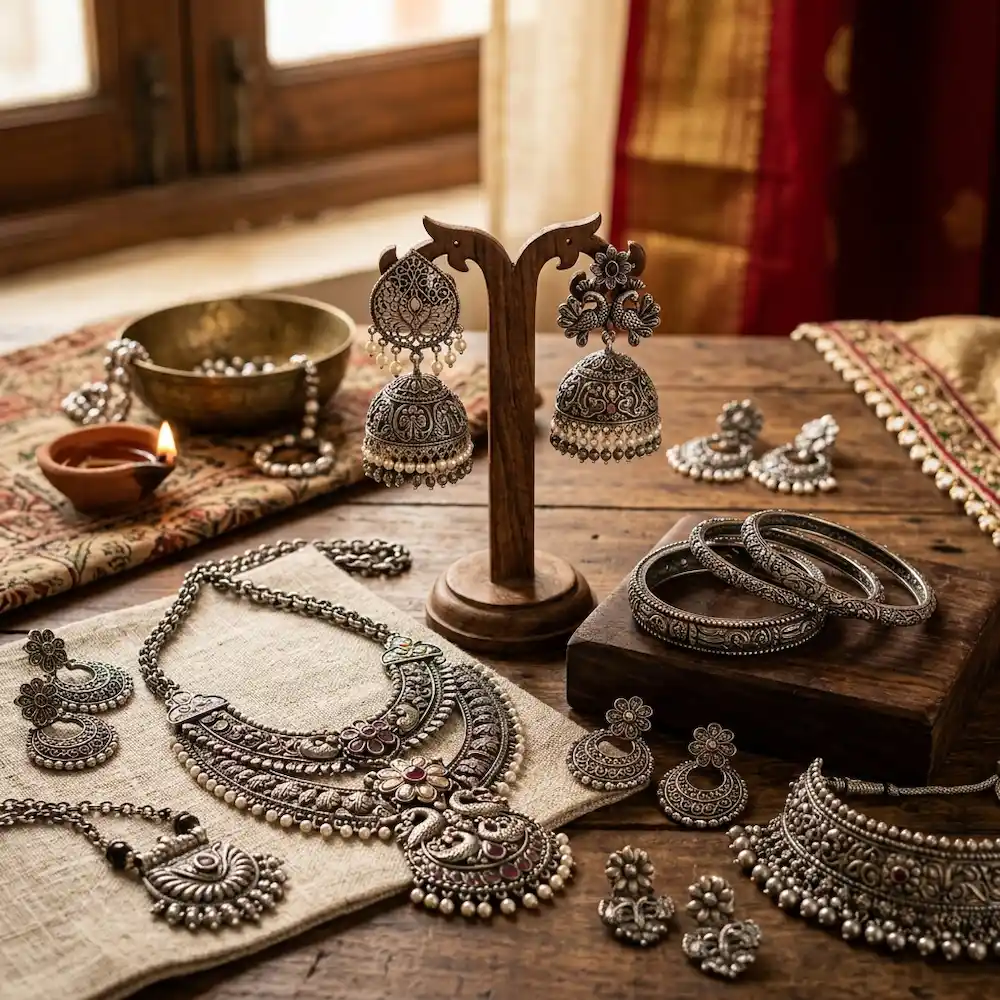
Common Oxidised Jewellery Styles
Some of the most popular oxidised pieces include:
- Jhumkas – classic bell-shaped earrings
- Statement necklaces – often featuring temple-inspired or tribal motifs
- Bangles – chunky or intricately carved
- Rings – bold, textured designs
- Statement earrings – chandbalis and drop styles
If you’re exploring different jewellery types beyond oxidised finishes, this guide on what is imitation jewellery is a helpful place to start.
How to Style Oxidised Jewellery
Oxidised jewellery is versatile enough for everyday wear and festive occasions alike:
- With kurtis: Pair a single oxidised jhumka or pendant for an easy, understated look.
- With sarees: A layered oxidised necklace adds drama to solid-colored sarees.
- With Indo-western outfits: Statement oxidised earrings work well with fusion dresses or palazzo sets.
- For festive looks: Go bold with a full oxidised set, including a necklace, earrings, and bangles.
How to Care for Oxidised Jewellery
Keeping oxidised jewellery looking its best doesn’t take much effort:
- Store pieces in a dry, airtight pouch to prevent moisture buildup.
- Avoid contact with perfumes, lotions, and household cleaners, as these can wear down the finish.
- Wipe gently with a soft, dry cloth after wearing.
- Store oxidised pieces separately from other jewellery to prevent scratching.
For more detailed cleaning steps, check out our guide on how to clean artificial jewellery.
Final Word
Oxidised jewellery offers a distinctive, antique-inspired look that fits effortlessly into both everyday and festive wardrobes. Understanding what the finish actually is—and isn’t—can help you shop smarter and care for your pieces properly, so they stay beautiful for years to come.
Frequently Asked Questions
Is oxidised jewellery made of silver?
Not always. While sterling silver is commonly oxidised, the dark finish can also be applied to other base metals and alloys. Always check the product description to confirm the material.
Can oxidised jewellery be worn daily?
Yes, many oxidised pieces are suited to everyday wear. However, avoiding contact with perfumes, lotions, and moisture will help the finish last longer.
How should oxidised jewellery be stored?
Store oxidised jewellery in a dry, airtight pouch, away from direct sunlight and separate from other jewellery pieces to prevent scratches and preserve the finish.